Minesweeper: Complete Guide, History, Rules, and Pro Tips
Minesweeper is one of the most iconic logic-based puzzle games ever created. Simple in appearance but deep in strategy, Minesweeper has challenged players for decades. From casual gamers to hardcore puzzle solvers, this classic game continues to attract millions of players worldwide due to its brain-training value, low system requirements, and addictive gameplay.
In this detailed guide, you’ll learn everything about Minesweeper — including its history, how it works, rules, strategies, variations, and why it remains popular today, making it suitable for informational websites, gaming blogs, and educational platforms.
What Is Minesweeper?
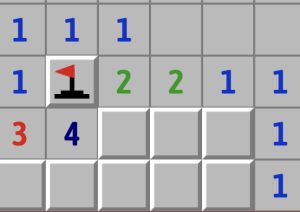
Minesweeper is a single-player puzzle game where the goal is to clear a rectangular grid without detonating hidden mines. Each square on the board can either contain a mine or be empty. When a player clicks on an empty square, a number appears indicating how many mines are adjacent to that square.
The challenge lies in using logic and deduction to determine where the mines are located based on these numbers.
History of Minesweeper
Minesweeper gained massive popularity after being included as a built-in game in Microsoft Windows operating systems during the early 1990s. However, versions of the game existed even earlier under different names.
Key Milestones
- 1980s: Early versions appeared on mainframe computers
- 1990: Microsoft released Minesweeper with Windows 3.1
- 1992–2009: Became one of the most played PC games globally
- 2010s–Present: Available online, on mobile apps, and in browser-based versions
Microsoft originally included Minesweeper to help users learn mouse control, particularly right-click and left-click actions.
How Minesweeper Works
The Minesweeper board consists of a grid of clickable squares. The size of the grid and number of mines depend on the difficulty level.
Basic Gameplay Mechanics
- Clicking a square reveals what’s underneath
- If it’s a mine, the game ends
- If it’s empty, a number appears
- The number shows how many mines are touching that square
- Players flag squares they believe contain mines
- The game is won when all non-mine squares are revealed
Minesweeper Rules Explained
Understanding the rules is essential for mastering Minesweeper.
Core Rules
- A mine ends the game immediately
- Numbers range from 1 to 8
- Numbers represent mines in adjacent squares (including diagonals)
- Flags help mark suspected mines
- No guessing is required in a fair Minesweeper board
- All safe tiles must be revealed to win
These simple rules create a complex and highly strategic experience.
Difficulty Levels in Minesweeper
Most versions of Minesweeper include three main difficulty settings:
Beginner
- Small grid
- Few mines
- Ideal for learning basics
Intermediate
- Medium grid
- Moderate number of mines
- Requires logical deduction
Expert
- Large grid
- High mine density
- Designed for experienced players
Some modern versions allow custom grids, enabling players to adjust difficulty manually.
Minesweeper Strategy and Tips
Although Minesweeper looks random, it is a logic-based game. Skilled players rely on patterns and probability rather than guesswork.
Beginner Tips
- Start clicking near corners or edges
- Use flags conservatively
- Avoid random guessing early in the game
Advanced Strategies
- Learn common number patterns (1-2-1, 1-1)
- Use process of elimination
- Analyze groups of numbers together
- Recognize safe moves vs risky guesses
Mastering these techniques significantly improves win rates and completion times.
Why Minesweeper Is Still Popular
Despite being decades old, Minesweeper continues to thrive in the digital age.
Reasons for Its Longevity
- Simple design, deep logic
- No internet connection required
- Improves focus and problem-solving skills
- Quick play sessions
- Suitable for all age groups
Minesweeper is also popular among programmers and engineers because it encourages analytical thinking.
Benefits of Playing Minesweeper
Playing Minesweeper regularly offers several cognitive and mental benefits.
Key Benefits
- Enhances logical reasoning
- Improves pattern recognition
- Boosts concentration
- Reduces stress through focused gameplay
- Encourages strategic thinking
Many educators consider Minesweeper a valuable tool for developing critical thinking skills.
Online and Mobile Versions of Minesweeper
Today, Minesweeper is available on multiple platforms.
Where You Can Play
- Web browsers
- Android and iOS apps
- Desktop operating systems
- Gaming portals
- Educational websites
Modern versions often include features like:
- Timers
- Hints
- Undo options
- Daily challenges
- Leaderboards
Variations of Minesweeper
Over time, many creative variations of Minesweeper have emerged.
Popular Variants
- Hexagonal Minesweeper
- 3D Minesweeper
- Multiplayer Minesweeper
- Themed boards
- No-guess Minesweeper
These versions add new dimensions to the classic gameplay while keeping the core mechanics intact.
Minesweeper and Competitive Play
Some players treat Minesweeper as a competitive sport.
Speedrunning
- Completing boards in the shortest time possible
- Official records tracked by communities
- Requires memorizing patterns and rapid deduction
Competitive Minesweeper showcases how deep and skill-based the game truly is.
Minesweeper and Education
Minesweeper is often used as an educational resource.
Educational Uses
- Teaching probability
- Developing logic skills
- Introducing algorithmic thinking
- Training decision-making under uncertainty
It is especially useful for students in mathematics, computer science, and engineering fields.
Is Minesweeper Safe for Kids?
Yes, Minesweeper is generally safe and appropriate for children.
Why It’s Kid-Friendly
- No violence or graphic content
- Encourages thinking over reflexes
- Easy to understand
- No in-game purchases in classic versions
Parents and teachers often recommend Minesweeper as a healthy alternative to action-heavy games.
Common Mistakes in Minesweeper
Even experienced players make mistakes.
Mistakes to Avoid
- Overusing flags
- Ignoring obvious patterns
- Guessing too early
- Playing too fast without analysis
- Not learning from previous losses
Improvement comes from recognizing and correcting these habits.
Minesweeper and Artificial Intelligence
Minesweeper has become a popular test case in AI research.
AI Applications
- Probability modeling
- Decision trees
- Constraint satisfaction problems
- Machine learning experiments
Researchers use Minesweeper to study how machines solve uncertain problems.
Future of Minesweeper
The future of Minesweeper looks promising.
What to Expect
- More mobile-friendly versions
- Enhanced visuals
- Competitive online modes
- Educational integrations
- AI-powered hints
Despite modern gaming trends, Minesweeper’s simplicity ensures it will remain relevant.
FAQs About Minesweeper
What is the main objective of Minesweeper?
The main goal is to clear all non-mine squares on the board without triggering any mines.
Is Minesweeper based on luck or skill?
Minesweeper is primarily a skill-based game that relies on logic, though rare situations may involve probability-based decisions.
Can Minesweeper always be solved without guessing?
Many modern versions are designed as “no-guess” boards, but classic versions may sometimes require calculated risks.
Why do numbers appear in Minesweeper?
Numbers indicate how many mines are located in adjacent squares, helping players deduce safe moves.
Is Minesweeper good for brain training?
Yes, Minesweeper improves logical thinking, memory, focus, and analytical skills.
Final Thoughts
Minesweeper is more than just a classic game — it’s a timeless logic puzzle that continues to educate, challenge, and entertain players around the world. Its simple design hides a surprisingly deep strategic experience, making it perfect for both casual gamers and serious thinkers.